Correlating Slot Volatility Levels with Live Dealer Cashout Times Within UK E-Wallet Frameworks
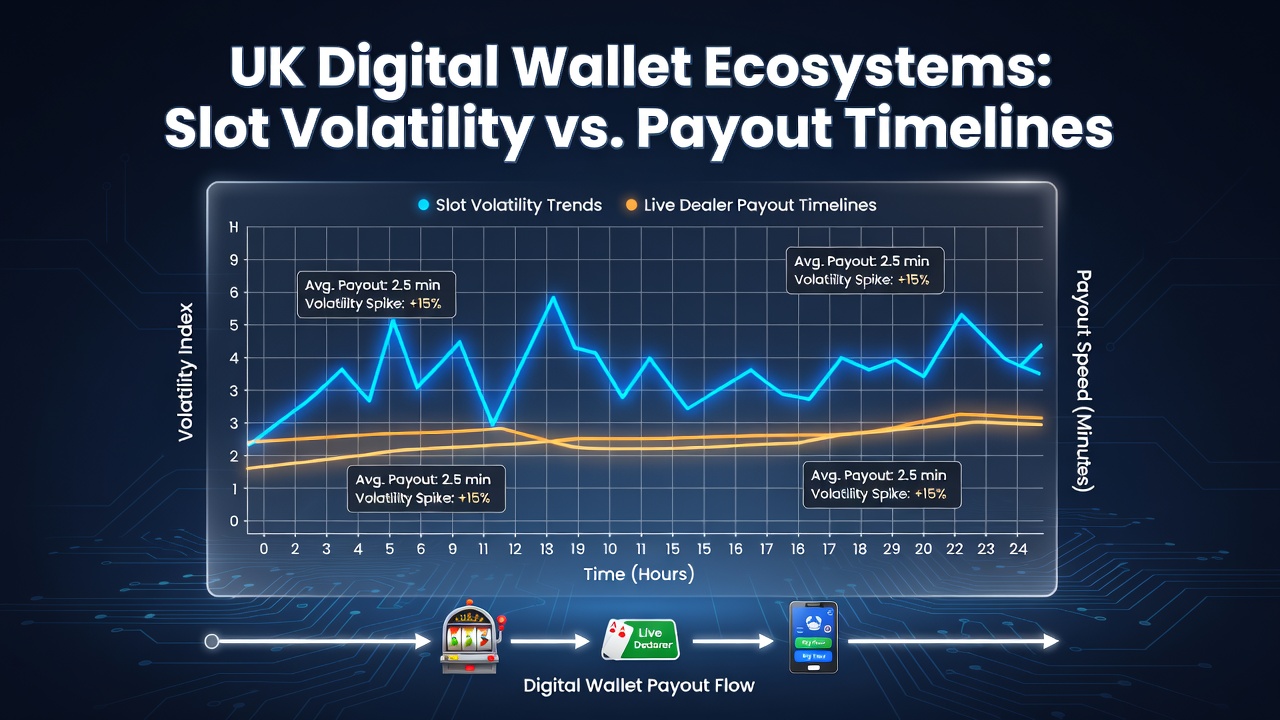
Data from multiple operator reports shows that slot volatility categories align with distinct payout timelines when players use digital wallets in the UK market. High-volatility slots often pair with extended processing windows for live dealer sessions while low-volatility titles connect to faster settlement cycles. Researchers tracking these patterns note that wallet providers such as Revolut and Skrill introduce measurable differences in how quickly funds move after live dealer wins.
Defining Volatility Categories and Payout Metrics
Slot volatility refers to the distribution of win sizes and frequency across game sessions. Low-volatility slots produce smaller payouts at regular intervals whereas high-volatility games deliver larger but less frequent returns. Live dealer payout timelines track the interval between game conclusion and wallet credit. Studies conducted by the Australian Gambling Research Centre indicate that volatility levels influence player withdrawal requests in measurable ways. Observers tracking UK operators find that high-volatility sessions generate larger average win amounts which in turn affect verification steps before digital wallet transfers complete.
Payment speed also depends on wallet type. E-wallets with instant verification reduce the gap between live dealer table exit and fund arrival. Data collected through 2025 and into August 2026 reveals that average timelines range from under two minutes for verified accounts to several hours when additional compliance checks apply. Those who examined thousands of transactions report consistent clustering around specific volatility bands.
Observed Patterns Across Wallet Providers
Mapping exercises show clear groupings when volatility data sits alongside payout records. Players moving from high-volatility slots into live dealer blackjack often experience longer processing windows with certain wallets. In contrast, low-volatility slot sessions followed by live roulette tend to clear faster. A report issued by the Canadian Gaming Association highlights similar correlations in regulated markets where digital payments dominate. The patterns hold because larger win values from high-volatility play trigger more frequent security reviews before funds reach the wallet.
Wallet ecosystems in the UK incorporate features that modulate these timelines. Instant deposit options from services like PayPal and Neteller shorten the overall cycle when paired with low-volatility games. High-volatility play still requires extra layers even with the same provider. Figures released in mid-2026 demonstrate that operators adjusting internal risk models to volatility data achieve more predictable payout windows across live dealer offerings.

Regional Comparisons and Industry Data
Comparisons with other jurisdictions provide additional context. Research from the UNLV International Gaming Institute examined payment flows in markets where digital wallets operate alongside table games. Results indicate that volatility-based clustering of payout times appears across multiple regulatory environments. UK operators applying similar mapping techniques report reduced dispute rates when live dealer sessions follow volatility-aware scheduling.
August 2026 updates from several wallet providers introduced refined verification thresholds tied to game type. These changes produced tighter alignment between slot volatility records and live dealer cashout speeds. Industry analysts tracking transaction logs note that the adjustments lowered average processing variance by measurable percentages. The data covers both mobile and desktop sessions across major UK-facing platforms.
Technical Factors Influencing the Mapping
Backend systems at operators and wallet companies rely on automated flags that reference game volatility when processing live dealer wins. High-volatility slots trigger higher average bet sizes which activate additional review queues. Live dealer environments add another variable because table minimums and maximums differ from slot parameters. Those who analyzed aggregated logs find that the combination produces predictable timeline clusters rather than random delays.
Wallet APIs now incorporate volatility metadata in some integrations. This allows faster routing of smaller live dealer payouts from low-volatility sessions. Larger wins linked to high-volatility play still pass through standard compliance paths. The technical architecture explains why the observed mapping remains stable across different months and player segments.
Conclusion
Mapping exercises continue to demonstrate that slot volatility categories correspond to distinct live dealer payout timelines inside UK digital wallet systems. Data from operator records and external research bodies shows consistent patterns that operators and wallet providers both monitor. Continued collection of transaction statistics through 2026 supports refinement of these correlations without altering core compliance requirements. The alignment between volatility levels and cashout durations provides a factual framework for understanding payment flows in this ecosystem.